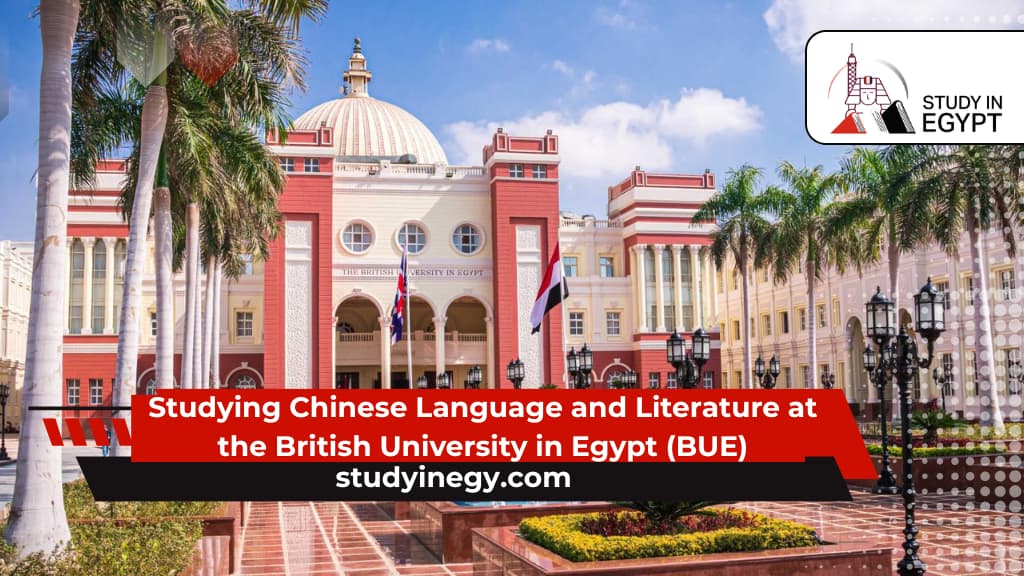
Studying Chinese Language and Literature at the British University in Egypt (BUE) … The fields of languages and translation across all work environments are undergoing massive digital transformations that have reshaped the concept of communication, work, and innovation.
In fact, we are in the era of multinational companies that are no longer constrained by geographical boundaries in the face of digital information flow, and the Chinese language and its literature have occupied a major position within these global companies.
This has certainly imposed a new reality that requires non-traditional skills in learning the Chinese language in the global job market, especially in this field which has undergone and continues to undergo extensive restructuring due to artificial intelligence systems.
In this context, the British University in Egypt (BUE) recognized these radical changes early on, and worked on developing leading academic programs in the specialization of Chinese language and literature, integrating linguistic authenticity with deep understanding of Chinese culture and literature, along with digital professionalism.
This comes with the aim of enabling international students to keep pace with the acceleration of the new reality in work environments that require distinction, creativity, and deep awareness of this language and its sciences.
In this article, we will highlight many points about the excellence of this faculty’s programs in teaching this language, which is considered one of the most important in the world, both in the present and the future. We will also explain how it will grant you a comprehensive educational experience that enables you to establish a solid foothold in a rapidly changing competitive job market.
Smart Integration With Digital Development That Goes Beyond Traditional Boundaries
You may have often asked yourself: what is the position of learners and specialists of vital languages in the job market in the era of artificial intelligence systems, or more precisely, large language models?”
The answer to this question lies in the fact that these profound transformations in the field of language learning and translation have actually become an effective tool for specialists who possess the ability to integrate with these changes and who have considered them from day one as a tool rather than a replacement for the precise human element that is characterized by reliability and deep awareness of the culture of the language being learned.
This is what the university realized early by developing the strategies of this program and working to keep pace with it, rather than merely observing it from a distance or standing as a passive spectator.
Therefore, the Faculty of Arts and Humanities has updated its curricula to align with the requirements of the “smart world” and modern, ultra-fast digital tools, where digital technologies have been integrated into the core of the educational process through the following:
Interactive learning platforms:
The university relies on advanced Learning Management Systems (LMS) that allow students easy access to diverse digital educational resources, audio recordings, and interactive videos that enhance pronunciation and listening skills in a realistic way that significantly raises students’ language levels.
Computational linguistics and integration with technologies:
The developed curricula include introductions to machine translation and post-editing (MTPE) and dealing with natural language processing software.
This certainly qualifies students to work in technology and artificial intelligence sectors concerned with developing Chinese content.
Focus on literary skills suitable for the twenty-first century:
Chinese literature and history are taught through deep, critical, and creative analytical perspectives that utilize digital tools in research and analysis.
This enables students to produce creative content that aligns with contemporary global tastes and makes them proficient in the language as if it were their native language, at a C2 level.

Practical And Applied Training As A Bridge To The Professional Reality
The British University, especially the Chinese language and literature programs, believes that theoretical knowledge does not reach its full importance or effectiveness without practical application.
Therefore, the Chinese language program places practical training at the forefront of its priorities to provide real preparation for students, enabling them to develop practical problem-solving skills and even invest in them, so they can possess tangible professional experience.
What supports this practical training includes the following:
Strategic partnerships: The university has strong relationships with major Chinese companies operating in Egypt and the Middle East, especially in the Suez Canal Economic Zone, one of the most important economic regions in the Middle East.
This provides students with intensive internship opportunities in real international work environments.
Simultaneous interpretation labs: The university has labs equipped with the latest simultaneous interpretation technologies, where students train by simulating international conferences and vital diplomatic meetings that require extreme accuracy and reliability, which are currently only found in human linguistic specialists.
Cultural and academic exchange: Students have unique opportunities to participate in exchange programs with prestigious Chinese universities, in addition to activities organized by the Confucius Institute that the university collaborates with, giving them unparalleled linguistic and cultural immersion.
Work environment simulation: Students are assigned applied projects that include website localization, film translation, and writing economic reports, making them ready to join the job market immediately after graduation without the need for additional training periods.
What Are The Competitive Advantages Of The British University In Teaching This Program
The British University in Egypt (BUE) is distinguished by many significant advantages that international students seek.
These are advantages through which the student can form a clear path before their eyes toward a comprehensive educational experience with features and dimensions that can truly refine and qualify students for a work environment that, without exaggeration, changes every month.
Among the most Prominent of these advantages:
Real Value of the Degree as a Passport to Major Global Companies and Institutions
Choosing to study at the British University in Egypt means obtaining a degree with a prestigious academic and practical reputation at both regional and international levels. The strength and recognition of the degree in global markets lie in the British quality system followed by the university, in cooperation with partner universities in the United Kingdom.
In reality, major companies have well recognized that BUE graduates have undergone real evaluation standards and genuinely effective training without slogans or superficial procedures, and therefore they guarantee their academic and professional competence. Accordingly, this academic recognition certainly opens doors to work in the following:
- International organizations.
- Diplomatic entities.
- Cross-continental investment companies.
- Global news agencies.
Effective Educational Environment For Activities And Intensive Practical Training
The British University in Egypt represents a model of a modern campus that provides an ideal environment for international students.
The campus is characterized by a design that combines modernity with effective physical capabilities to enhance the academic experience and comfort, providing all means that ensure a rich educational experience through:
Smart classrooms and labs: Classrooms equipped with the latest audio-visual tools, and specialized language labs that allow students to practice the language in an interactive environment.
Central library: It includes a large and useful collection of reliable sources and references in Arabic, English, and Chinese, in addition to global digital databases.
Student life: The university is full of sports, artistic, and social activities, and there are cultural clubs that organize “Chinese Culture Day” and Arabic and Chinese calligraphy competitions, which enhances cultural exchange within the campus and creates a balance between academic seriousness and enjoyment of culture and its exchange.
Global Quality At A Competitive Cost
Egyptian universities in general are considered an attractive educational destination for international students due to the ideal balance they offer between quality of education and cost of living.
In this regard, the British University provides an educational opportunity with international standards and accredited programs at highly competitive prices compared to studying in Europe or North America.
The annual tuition fees for the faculty range from approximately 3,997 to 3,275 US dollars only, which is a small amount compared to what a student might pay when studying outside Egypt.
Therefore, investing in education at BUE represents “value for money,” where the student receives a British education in the heart of the Middle East, with reasonable tuition and living costs, making it the smartest choice for students aspiring to obtain productive education for the job market without bearing excessive financial burdens.
What Are The Most Prominent Specializations And Tracks Of Chinese Language and Literature at the British University
The university’s Chinese language department offers specialized tracks aimed at graduating cadres capable of competing in diverse sectors:
Business Chinese track: Focuses on economic terminology, business correspondence, and negotiation skills in Chinese, making it ideal for those aspiring to work in the corporate and investment sector.
Written and simultaneous translation track: Aims to prepare professional translators who possess the tools for accurate cultural and linguistic transfer in political, legal, and technical fields.
Contemporary Chinese literature and culture track: Focuses on understanding modern Chinese society through its literature and arts, qualifying graduates to work in cultural fields, media, and academic research.
In conclusion, you are not choosing just a university, but rather choosing a launching platform that provides you with the technical tools, linguistic skills, and practical experience necessary to succeed in a constantly changing world. Are you ready?