Studying in the Faculty of Science at Suez Canal University … Radical digital transformations have imposed themselves across all vital fields and work environments, including, of course, the fields of basic sciences.
In reality, we cannot confine the consequences and changes resulting from these astonishing and rapidly accelerating digital transformations solely within the category of challenges and negatives.
Certainly, these technologies have introduced new challenges, but the fields of basic sciences and their distinguished specialists have always proven their exceptional ability to withstand all changes and even transform them into promising opportunities in work environments while welcoming new ideas and talents capable of keeping pace and exploiting “challenges” as golden opportunities.
This is not empty slogans or false reassurance, but rather a real reality within the work environment and scientific research in basic sciences and their specializations. However, what matters most is choosing the educational destination that will ensure, as a student, that you possess the necessary capabilities to confront this unprecedented digital and technological revolution that has been accelerating at an unusual pace for many years.
What About the Faculty of Science at Suez Canal University?!
In this context, the Faculty of Science at Suez Canal University understands this equation precisely, as it has dealt with the challenges and transformations affecting the global work environment with pragmatism and professionalism.
The faculty did not settle for passive observation or continue with curricula and techniques that are no longer effective today. Instead, it worked realistically and responsibly to formulate and implement a number of sustainable updates aligned with any developments, integrating all modern technologies and training students to use them as distinguished specialists, making technology a tool rather than a competitor.
In this article, we highlight the most important key points about studying at this distinguished faculty and how effective these curricula and educational strategies are in qualifying students and providing them with the most important competitive advantages that guarantee them a strong position in the major arenas of their specialization.
Curriculum Development: Effective Impact And Smart Handling Without Unrealistic Slogans
The Faculty of Science at Suez Canal University believes that academic stagnation is the primary enemy of creativity and the sustainability of successfully preparing students for everything new and for what they will encounter in the work environment after graduation.
Therefore, the faculty has taken impactful and carefully studied proactive steps under the supervision of leading professors who are actively engaged in shaping the modern work environment to reformulate its curricula so that they are not disconnected from reality.
According to these updates and developments, education within the faculty is no longer limited to memorizing classical theories or outdated techniques. Rather, it is fundamentally based on integrating “digitization” and modern technologies, such as specialized artificial intelligence systems, into the core of scientific disciplines.
The curricula have also been updated to include the latest advanced simulation software and big data analysis in the fields of chemistry, physics, and biology.
This certainly allows students to test theories in a virtual environment with the highest possible level of accuracy and integration with real-world conditions before moving to the laboratory.
Moreover, the faculty has adopted interactive learning methods based on precise and confident problem-solving (Problem-Based Learning).
Thanks to this approach, digital platforms and smart tools are utilized to facilitate communication between students and professors, ensuring a dynamic and flexible flow of information.
Therefore, this digital transformation ensures that graduates do not merely possess classical theoretical knowledge, but also acquire an integrated “technological mindset” aligned with their specialization, enabling them to adapt modern tools to derive innovative scientific solutions, thereby bridging the gap between academia and the requirements of advanced industries.
Intensive Practical And Applied Training: The Solid Bridge Towards Professionalism And Integrated Precision
Practical training is considered the backbone and decisive element that the Faculty of Science at Suez Canal University invests in and prioritizes through all effective means and technologies.
The faculty’s realistic goal is not to graduate “theoretical researchers,” but rather “scientific professionals” who possess mastery and high precision in handling the most delicate and complex laboratory equipment.
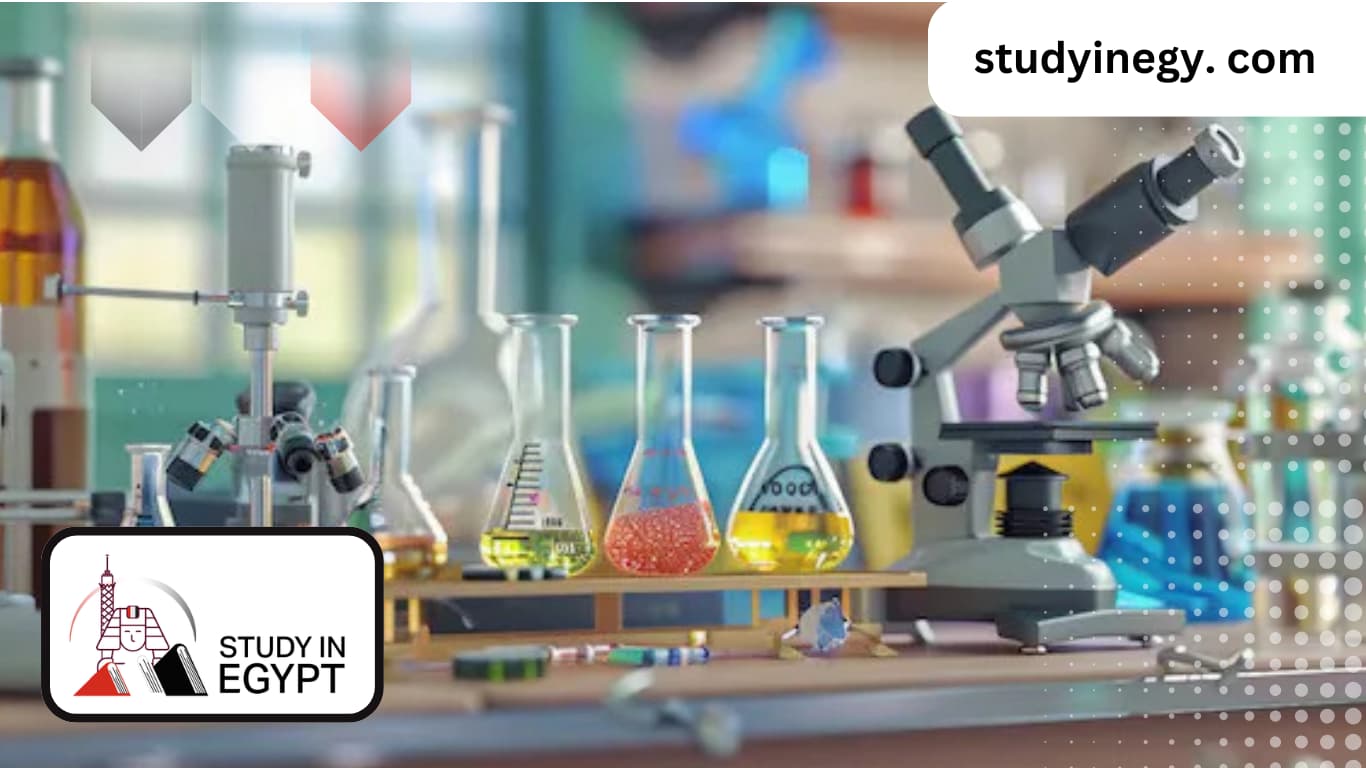
The training program at the faculty is characterized by being a comprehensive journey that begins in specialized laboratories equipped with the latest technologies and extends to field training in major industrial and research institutions.
To implement this commitment in practice, the faculty has established a wide network of cooperation with leading research centers and companies in petroleum and mining; pharmaceuticals; as well as entities concerned with the environment and renewable energy.
This cooperation provides international students with a valuable and essential opportunity for real qualification in the labor market, allowing direct and intensive engagement at the right time with real work environments, where they participate in applied projects that address real-world problems and may result in new technologies that improve the reality of work in this field.
Additionally, spending long hours in research and experimentation under the supervision of experienced professors grants students high professional confidence and makes their CVs competitive in international companies seeking graduates with both field experience and academic excellence.
Competitive Advantages: Realistic Integration And Balance To Shape A Comprehensive Educational Experience
In reality, the faculty offers a number of vital advantages from the perspective of international students, as these represent decisive factors in choosing the appropriate educational destination.
These competitive advantages are realistically and effectively balanced within a framework set by the faculty to guide students toward comprehensive academic qualification and essential post-graduation benefits, enabling engagement with major professional arenas. The most important of these advantages are as follows:
Strong Value Of The Degree: Real Positive Impact When Applying To Major Companies And Research Centers
The Faculty of Science at Suez Canal University enjoys a prestigious academic reputation both locally and regionally, as its programs are periodically reviewed according to strict quality assurance and accreditation standards.
It has also advanced significantly in global rankings such as Shanghai, QS, and Times, which supports its academic and applied excellence and motivates its continuous development.
However, in reality, the true value of the degree lies primarily in the scientific depth and analytical skills that students acquire, enabling them to compete confidently and efficiently in regional and international labor markets.
Integrated Educational Environment: A Vital Element In A Practice-Oriented Experience That Refines Students
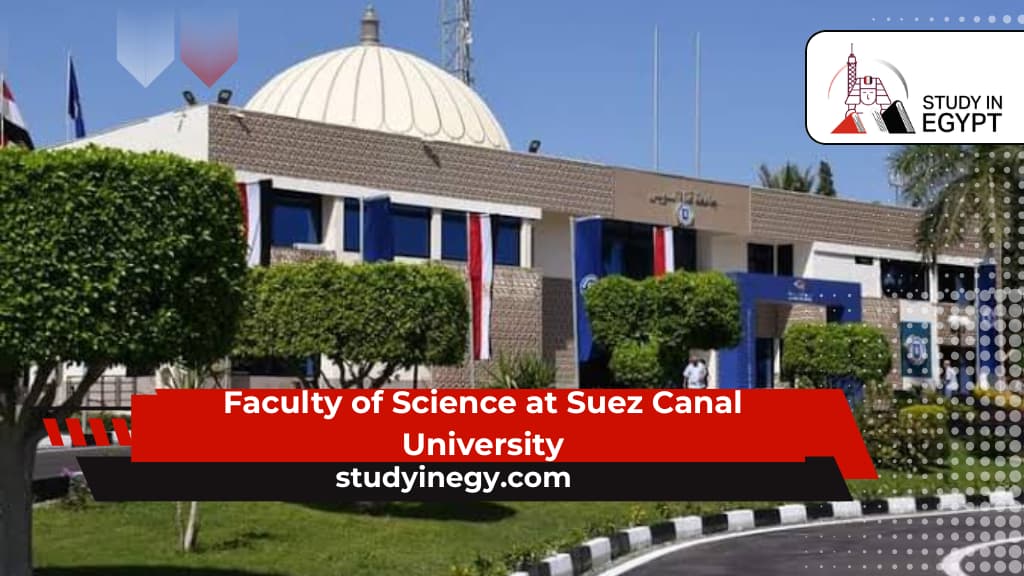
The university campus in Ismailia is characterized by its calm atmosphere and design that combines modernity with green spaces, providing an ideal environment for study that is comfortable and reduces stress.
The faculty also includes smart lecture halls and specialized laboratories that are regularly updated with advanced measurement and analysis equipment comparable to those in major international universities and real-world work environments.
In addition, the faculty places great emphasis on diverse student activities aimed at refining personality and developing leadership and social skills, which provide another competitive advantage in the labor market.
Reasonable Cost With High Quality: The Winning Factor In Student Considerations
Egypt is considered a smart educational destination for international students seeking “value for money.”
Accordingly, the Faculty of Science at Suez Canal University offers high-level educational programs at highly competitive costs compared to universities in Europe or North America.
Annual tuition fees range between approximately $4000 and $5000 USD, in addition to a one-time registration fee of about $1500 USD.
This financial balance allows students to focus on their academic achievement and enjoy an excellent quality of life without bearing excessive financial burdens, making studying in Ismailia an irreplaceable opportunity to obtain education that meets global quality standards and aligns with labor market realities at a reasonable budget.
Main Specializations Of The Faculty: Pathways To Excellence
The academic tracks within the faculty are diverse, covering all aspects of modern sciences, giving students great flexibility in choosing the specialization that suits their professional ambitions. The most important of these specializations include the following:
Chemistry (with its various branches): focuses on the study of matter and its reactions, preparing graduates for work in petrochemicals, pharmaceuticals, and quality control.
- Physics: addresses the fundamental laws of the universe, with a particular focus on applied physics and electronics, opening opportunities in energy and communications.
- Botany and Microbiology: a vital specialization linking science with agriculture and medicine, focusing on microorganisms and their applications in biotechnology.
- Marine Sciences: due to the university’s strategic location on the Suez Canal, this is one of the most prominent fields, studying marine resources and environmental sustainability.
- Geology and Earth Sciences: focuses on natural resource exploration, mining, and mineral management and is highly demanded in the global job market.
- Mathematics and Computer Science: combines strong mathematical foundations with the latest programming and digital analysis technologies, making it the most in-demand specialization in the data era.
In short, choosing to study at this faculty is the first step toward building an independent professional identity. It means placing your foot on solid ground of knowledge and application, qualifying you to become a distinguished specialist who leverages all changes and developments to their advantage rather than viewing them as a threat. Are you ready?