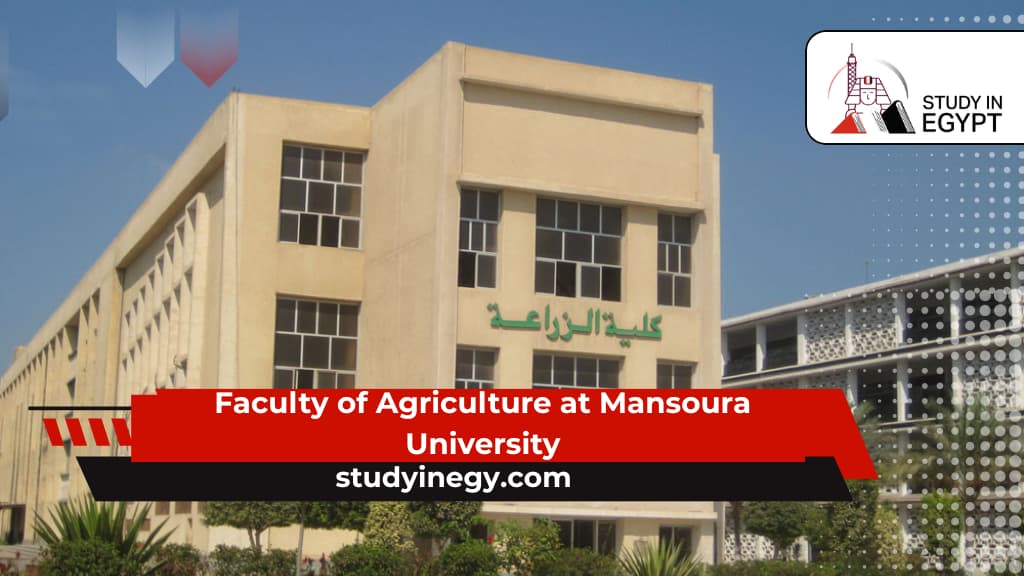
Studying at the Faculty of Agriculture at Mansoura University. We must say that we live in a world full of challenges, passing through many rapid digital and economic transformations.
But at a time when some professions appear and others disappear within years, “agriculture” remains the backbone and the most important element since the beginning of history for the survival of humanity. It is the profession that knows no absence and whose importance does not stop at any temporal limit, regardless of technological transformations, because it is linked to the human’s primal and foremost need: food and food security.
But agriculture today is no longer just a “field and primitive systems”; it has transformed into a complex science integrated intelligently with changes, combining the following:
- Biology.
- Engineering.
- Big Data.
Thus, the Faculty of Agriculture at Mansoura University understands this fact well; it is the distinguished faculty that does not graduate “traditional farmers,” but rather “future engineers” and leaders in a vital sector facing challenges of climate and large population growth, aided by digital intelligence.
In this article, we clarify the most prominent advantages of the faculty and how it pragmatically and intelligently keeps pace with these developments and challenges.
Pragmatism And Curricula Speaking The Language Of The Digital Age
The Faculty of Agriculture at Mansoura University did not stand as a passive or pessimistic observer in the face of what is called the “sharp digital revolution.”
In fact, the faculty adopted a pragmatic and highly efficient professional approach aimed at bridging the gap between the academic side and the global labor market environment through the following:
- Professional Integration With Artificial Intelligence (AI) Systems
- Professional and intelligent interaction with advanced AI models has become an integral part of the college curricula, where students learn how to use:
- Precision Agriculture Through Modern Systems: This technique is the most important for reducing waste and improving productivity using sensors and data while ensuring the quality and safety of crops for consumers.
- Big Data Analysis: Predicting precise harvest times and combating pests before they occur.
- Drones: Monitoring crop development stages and drawing thermal soil maps, which prevents problems that could cost huge sums of money before they happen.
Intensive Practical Training In Realistic Environments
The faculty believes that “knowledge that is not practiced is simply forgotten.”
Thus, intensive practical training represents more than 60% of the student experience in environments including:
Advanced Educational Farms: The faculty and its partners own vast areas, applying the latest smart irrigation and greenhouse systems.
Accredited Laboratories: Laboratories equipped with the latest devices for genetic testing, soil analysis, and food safety.
Partnerships With The Private Sector: The faculty has signed and continues to sign cooperation protocols allowing students to train in major food manufacturing companies and export farms in regional and international labor markets starting from the second academic year.
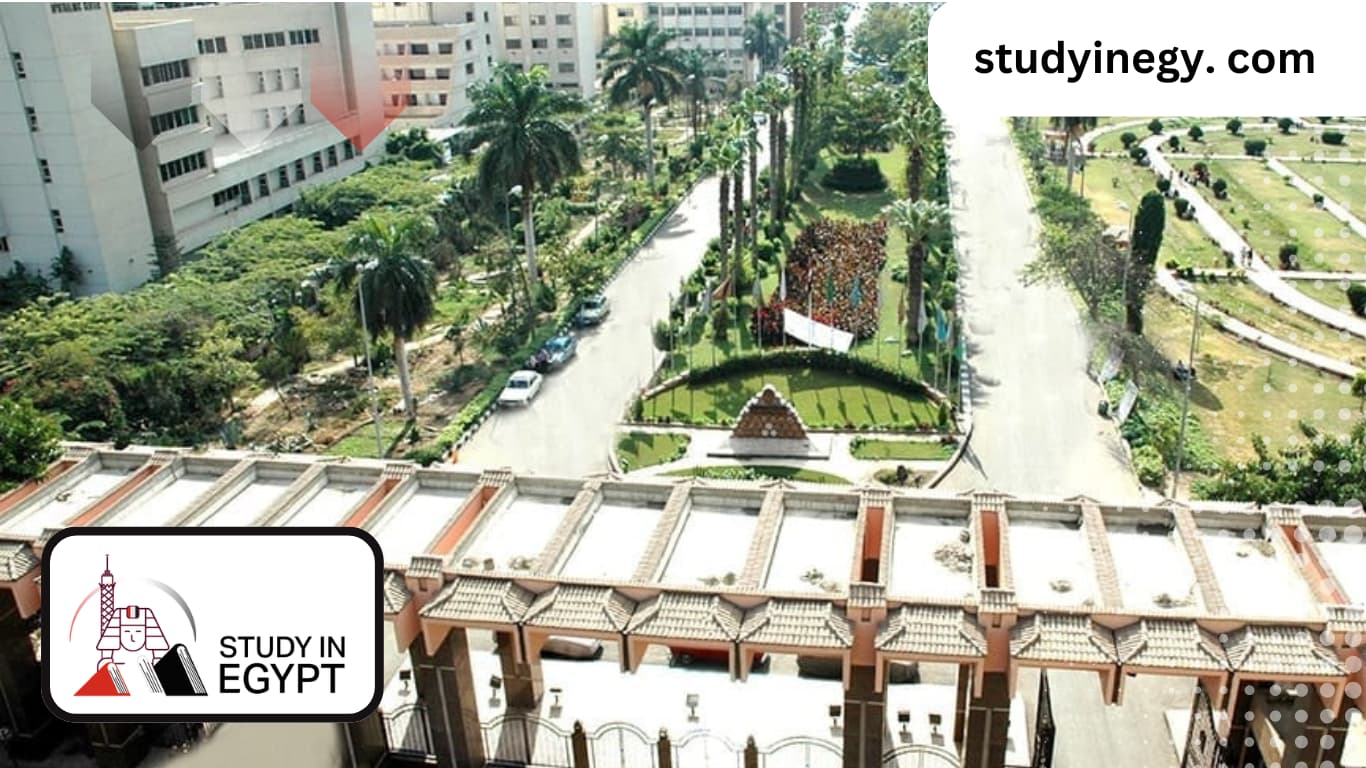
What Are The Advantages Of The Faculty Of Agriculture At Mansoura University?
Studying at the Faculty of Agriculture at Mansoura University offers many vital advantages for students, especially international students.
When we consider the priorities of this ambitious student, they seek a clear and reliable path to excellence and to acquiring skills and integration capabilities with labor market transformations, which the faculty fully provides through the following:
International Recognition And Strong Academic Reputation
Mansoura University holds advanced positions in the most important global academic rankings (such as Shanghai and QS rankings).
In fact, the Faculty of Agriculture is one of the main pillars that elevate the university’s ranking in agricultural sciences. The graduate holds a degree recognized not only locally but also globally, opening doors to work and scholarships in the most important companies and economic agricultural institutions in global labor markets.
Advanced Learning Environment At The Faculty
This distinguished faculty combines the heritage of its buildings with modern equipment such as the following:
- Smart lecture halls.
- Digital libraries provide access to the latest global research.
- A fully integrated e-learning platform facilitating interaction between student and professor.
Tuition Fees That Cannot Be Compared With The Quality Of The Scientific Experience
Amid the high costs of universities abroad, the Faculty of Agriculture at Mansoura University provides world-class education at reasonable tuition fees.
It is the most successful investment for the international student, who receives education quality comparable to international universities at a fraction of the cost.
While tuition fees abroad for this field may exceed tens of thousands of dollars, the faculty’s fees range between $4,000–$5,000 per year, with a one-time registration fee of $1,500.
The Fruitful Diversity Of Specializations Within The Faculty
The faculty does not merely graduate agricultural engineers in the traditional sense; it offers a large number of scientific departments and specialized programs based on using technical English, representing the most in-demand specializations in regional and international labor markets. Here are the most prominent tracks:
Department Of Biotechnology
In this advanced and successful department, science merges with the future.
Students study how to develop plant and animal strains resistant to harsh climate changes. They also practice using biotechnology in medicine and agriculture.
Graduates of this department are “scientists” working in top research centers and pharmaceutical and biotech companies.
Department Of Food And Dairy Sciences
Given the increasing importance of health awareness among the public and major institutions, this department emerges as one of the strongest career tracks.
Students learn food manufacturing engineering and how to manage production lines in major factories, focusing on international quality standards (ISO) and digital food safety.
Department Of Land And Water
With many countries focusing on desert reclamation, led by Egypt through the New Delta Project, graduates of this department are the most sought-after specialists in the labor market.
The specialization focuses on remote sensing technologies, AI soil analysis, and the highly efficient management of scarce water resources.
Department Of Agricultural Engineering And Biological Systems
This department links mechanical engineering with agriculture. Students are trained to design and operate hydraulic systems, control smart greenhouses, and maintain advanced heavy machinery.
Department Of Animal, Poultry, And Aquatic Production
It focuses on breeding technology, genetic improvement, and animal nutrition.
Thanks to the faculty’s poultry and fish farms, students gain field experience qualifying them to manage major national projects in animal protein production.
Department Of Agricultural Economics And Sociology
Agriculture is primarily the most important economic sector in any country, no matter how dependent it is on industry and modern technologies.
Students in this department study the intersection between capital success and agriculture simultaneously through the following:
- Agricultural project management (agribusiness).
- Global crop markets.
- This certainly can qualify you to become a successful agricultural entrepreneur.
Departments Of Plant Protection, Crops, And Horticulture
Classical specializations with a modern spirit: drones are used in spraying, mobile applications in diagnosing plant diseases, and hydroponics and aeroponics technologies are applied to produce high-quality export crops.