
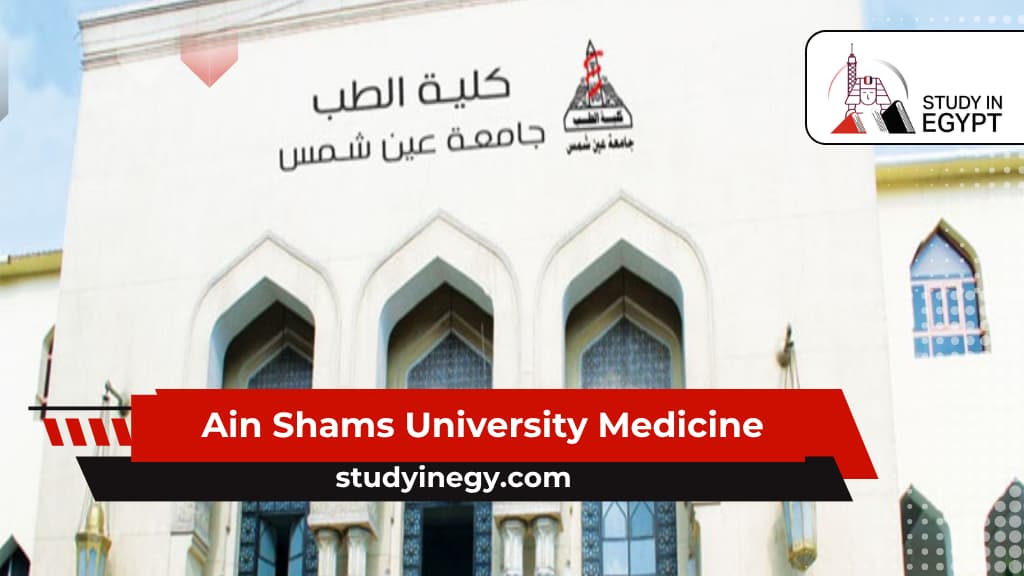
Ain Shams University Medicine aims to prepare a well-trained physician with competitive skills at both regional and global levels, capable of teaching, continuous learning, and lifelong professional development, while adhering to medical service standards and professional ethics.
The faculty supports continuous development of its programs, curricula, and scientific research, with a strong focus on expanding applied research and healthcare programs to meet community needs and contribute to environmental development.
Why Do Many International Students Choose Ain Shams Medicine Over European and American Universities?
Advantages of Studying at Ain Shams University:
1. Direct Admission to Medicine
At Ain Shams University, students enter the Faculty of Medicine directly from the first year.
In contrast, in countries like the United States and Canada, students must first complete 3–4 years of pre-medical studies and then apply to medical school, where competition is extremely intense.
2. Significantly Lower Costs
The cost of studying and living in Cairo is much more affordable compared to universities in the UK or the US, which can cost several times more.
3. Early Strong Clinical Exposure
Through hospitals such as Ain Shams University Hospitals, students encounter a wide range of medical cases from early years, providing strong practical experience.
4. Easier Admission Process
There are no complex admission requirements like the MCAT or intense competition for limited seats.
5. English-Medium Instruction
The medical program is taught in English, eliminating any academic language barriers.

What Is Studying at Ain Shams Medicine Like?
All Egyptian medical schools—especially Ain Shams University—are listed in major international university rankings such as QS, Times Higher Education, Shanghai, Leiden, and U.S. News. They are also recognized under UNESCO agreements. This means their degrees hold equivalent global value to those from European and American medical schools in both regional and international job markets.
The programs offer the same academic standards as European and American universities, combining comprehensive theoretical and practical education. Students gain detailed knowledge in both scientific and clinical aspects of medicine.
Additionally, students receive hands-on clinical training in Egyptian public hospitals, which often provides even greater exposure than some international programs. These hospitals handle a very high number of diverse cases daily, allowing students to gain extensive real-world experience using modern medical equipment under the supervision of highly experienced physicians in the Arab world.
As a result, international students studying medicine in Egypt benefit from high-quality education, globally recognized degrees, and significantly lower costs. Egyptian medical schools also offer a wide range of programs covering all medical specialties at various academic levels.
Tuition Fees for International Students in Egypt
- Initial registration fee: $1,500 USD (one-time fee for medical programs)
- Annual tuition fee: $8,000 USD
Compared to international universities, medical education costs in Egypt are considered very affordable.
Admission Requirements for Studying Medicine at Ain Shams University
- A minimum of 75% in high school (or equivalent) for undergraduate admission
- A Bachelor’s degree (minimum “Pass”) for Master’s programs
- A Master’s degree (minimum “Pass”) for PhD programs
- Approval from the Saudi Embassy in Egypt (for Saudi students)
Students can also use accredited study-abroad agencies to handle the application process smoothly for a reasonable fee.
Departments of the Faculty of Medicine – Ain Shams University
First: Basic (Pre-Clinical) Departments
These departments cover the foundational sciences:
- Anatomy
- Histology
- Physiology
- Biochemistry
- Pathology
- Microbiology
- Parasitology
- Pharmacology
- Public Health & Community Medicine
Second: Clinical Departments
These are studied in advanced years with hospital training:
- Internal Medicine
- General Surgery
- Pediatrics
- Obstetrics & Gynecology
- Ear, Nose & Throat (ENT)
- Ophthalmology
- Orthopedics
- Neurology
- Psychiatry
- Dermatology
- Cardiology
- Chest Diseases
- Anesthesia & Intensive Care
- Radiology
- Forensic Medicine & Toxicology